
 Proudly BC Owned & Operated for over 40 years.
Bulbs for Indoor Blooms
Fragrant & Beautiful Indoors All Winter | Some Need No Chilling At All | Great for Gifts & Family Projects
|
OVERVIEW Growing bulbs indoors is one of the most rewarding winter gardening projects: the anticipation of watching roots develop, shoots emerge, and flowers open during the darkest months of the year is genuinely delightful. Some indoor bulbs -- paperwhites, Amaryllis -- need nothing more than warmth and water and will bloom within weeks of planting. Others -- hyacinths, tulips, daffodils -- require a period of cold to trigger blooming, but the process is straightforward and the results are spectacular. This guide covers both groups in full. |
HOW IT WORKS
Understanding indoor bulb growing
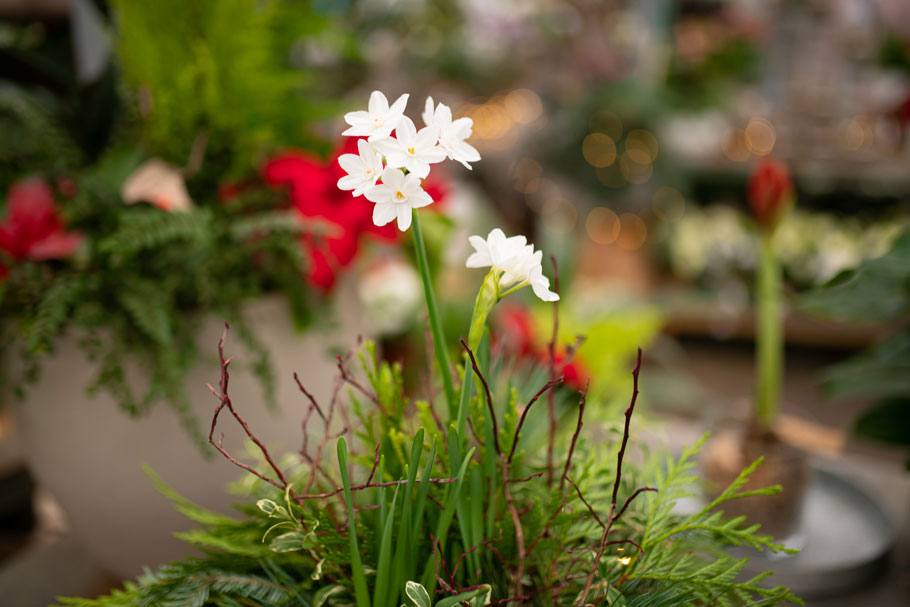
Growing spring bulbs indoors works by convincing them that winter has passed and spring has arrived, by artificially providing the cold period they would normally experience outdoors. The bulb stores all the energy it needs to produce a flower; the cold period triggers the hormonal response that releases that energy into growth. Without sufficient cold, most spring bulbs will not bloom indoors.
• Not all indoor bulbs need a cold period: Paperwhites, Grand Soleil d'Or Narcissus, and Amaryllis bloom naturally without any chilling period at all
• Hyacinths sold as 'prepared' or 'pre-chilled' have had some of the chilling done at the grower: they still need further cold, but significantly less than un-prepared bulbs
• Spring bulbs such as crocus, tulips, daffodils, and muscari need a full chilling period that you provide at home before bringing them indoors to bloom
QUICK REFERENCE
Chilling requirements at a glance
|
Bulb |
Chilling Required? |
Weeks of Cold |
Ready to Bloom In |
|
Paperwhites |
No |
None |
3-5 weeks from planting |
|
Grand Soleil d'Or Narcissus |
No |
None |
4-6 weeks from planting |
|
Amaryllis |
No |
None |
6-8 weeks from planting |
|
Pre-chilled Hyacinths |
Partially done |
8-10 more weeks |
3-4 weeks once sprouted |
|
Prepared Hyacinths |
Partially done |
8-10 more weeks |
3-4 weeks once sprouted |
|
Crocus (indoor) |
Yes |
15 weeks |
2-3 weeks once brought in |
|
Daffodils (indoor) |
Yes |
15-17 weeks |
3-4 weeks once brought in |
|
Muscari (indoor) |
Yes |
13-15 weeks |
2-3 weeks once brought in |
|
Tulips (indoor) |
Yes |
16-20 weeks |
2-3 weeks once brought in |
|
Dutch Iris (pre-chilled) |
Partially done |
Varies by supplier |
3-4 weeks once sprouted |
NO COLD PERIOD NEEDED
The easiest indoor bulbs: plant and enjoy
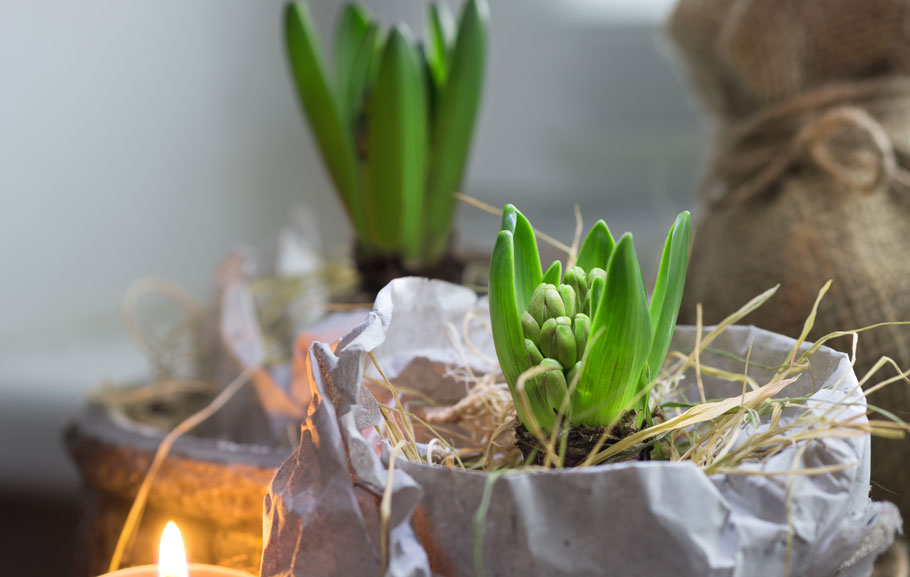
These bulbs contain everything they need to bloom without any cold period. Simply plant or set up in water, place in a bright spot, and watch them grow. Ideal for beginners, children, and anyone who wants guaranteed results with minimal effort.
|
Paperwhites Narcissus papyraceus No chilling needed -- easiest of all • Pure white, sweetly fragrant flower clusters on slender stems • The easiest indoor bulb: no chilling, no soil needed, no special equipment • Grow in water with pebbles, glass beads, or gravel for support • Roots visible within days; flowers open in 3-5 weeks • Excellent project for children -- roots and development are visible through a glass container • Use a tall glass cylinder or vase to keep stems upright and contained • Water level: maintain at the lower third of the bulb; never submerge the bulb itself |
Grand Soleil d'Or Narcissus tazetta 'Grand Soleil d'Or' No chilling needed -- golden colour • Similar to paperwhites but with vibrant golden-yellow flowers and golden trumpets • Gentle, almost fruity fragrance; 10-20 flower clusters per stem • Grow exactly as you would paperwhites: water, pebbles, no chilling required • A wonderful splash of cheerful winter colour when most other plants are dormant • Flowers open in 4-6 weeks from planting |
|
Amaryllis Hippeastrum spp. No chilling needed -- the showstopper • Enormous trumpet flowers on thick, sturdy stems; simply breathtaking • Available in red, pink, white, peach, green, salmon, and striped combinations • Requires soil in a pot (unlike paperwhites): use a well-drained potting mix or cactus mix • Choose a pot only 5 cm wider than the bulb; leave the top third of the bulb above soil • No chilling required: simply plant, water once, and wait for the stem to emerge • Flowers open in 6-8 weeks; larger bulbs produce more flower stems • See our separate Amaryllis guide for full care and reblooming instructions |
|
PAPERWHITES: GROWING METHODS
Three ways to grow paperwhites
|
METHOD 1: GLASS CYLINDER VASE WITH PEBBLES (MOST POPULAR) • Fill the bottom of a tall glass cylinder or vase with 5-8 cm of rounded pebbles, glass beads, or smooth river stones -- not sharp-edged gravel, which can damage the bulbs • Nestle the bulbs into the pebbles, pressing them gently but firmly so they sit upright without tipping • Add water until it reaches just the lower third of each bulb -- roots will reach down to the water quickly • Never fully submerge the bulb: the base should be at or just above the waterline • The tall vase keeps stems contained and upright; the pebbles weigh the whole arrangement down and prevent tipping • Maintain water level throughout; roots and development are fully visible through the glass -- excellent for children |
|
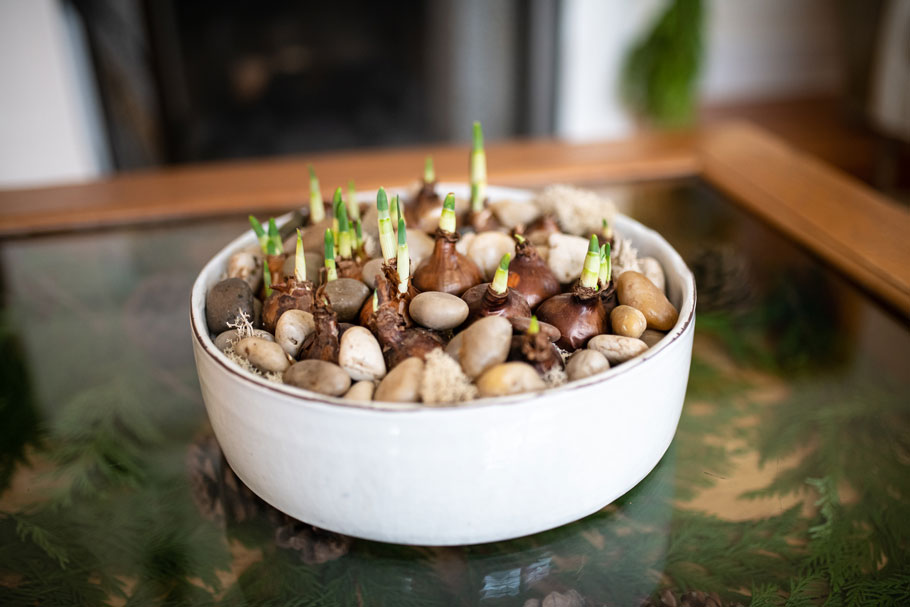
METHOD 2: SHALLOW DISH WITH DECORATIVE STONES • Use any shallow waterproof dish or bowl -- terracotta saucers, ceramic dishes, even a wide-mouth mason jar • Fill with decorative gravel, glass pebbles, or marbles and nestle bulbs into the surface • Keep water at the base level only -- not over the tops of the stones and not submerging the bulbs • Add seasonal decorations: cinnamon sticks, pine cones, moss, or ribbon for a beautiful gift presentation |
|
METHOD 3: SOIL IN A POT • Use a sturdy pot with drainage holes and a free-draining potting mix • Plant bulbs with tips protruding 2-3 cm above the soil surface; water thoroughly after planting • Allow to grow in a bright, cool location; water when the top of the soil feels dry • Add a finishing layer of moss over the soil, twigs as stem support, or tie developing shoots with a festive ribbon for a polished look |
|
REDUCING PAPERWHITE HEIGHT If your paperwhites grow too tall and flop over, try the 'gin trick': once shoots are 5 cm tall, replace the water with a solution of 1 part gin (or other clear spirits) to 7 parts water. The mild alcohol slows stem elongation without harming the flowers. Any clear alcohol works. This is particularly useful if your growing spot is warmer than ideal. |
BULBS THAT NEED A COLD PERIOD
Growing spring bulbs indoors
These bulbs require a period of cold -- ideally just above 0C to a maximum of 5C -- before they will grow and bloom indoors. This mimics the outdoor winter conditions they naturally experience before spring. The process takes planning but the results are exceptional.
|
Prepared Hyacinths Hyacinthus orientalis Partially pre-chilled -- most popular indoor bulb • The most intensely fragrant of all indoor bulbs: a single hyacinth fills a room • Available in deep purple, blue, pink, white, and yellow • Grown in soil or in a specially designed hyacinth vase (bulb vase) in water • Prepared means part of the chilling work has been done: still needs 8-10 more weeks of cold • Chill in a cool, dark place (garage, refrigerator) until shoot is 2-3 cm tall, then bring indoors • Flowers open 3-4 weeks after bringing into warmth and light |
Crocus Crocus spp. Cold period at home -- cheerful and compact • Small, cheerful flowers in purple, yellow, white, and striped; excellent for small pots • Requires a full 15 weeks of cold (just above freezing to 5C) before bringing indoors • Plant in shallow containers, tips up and close together • Flowers appear very quickly once brought into warmth -- 2-3 weeks • A beautiful and unusual conversation piece when blooming indoors in January |
|
Daffodils & Narcissus Narcissus spp. Cold period at home -- reliable and fragrant • Fragrant, familiar yellow or white flowers on sturdy stems • Requires 15-17 weeks of cold before bringing indoors; plant in September or October • Plant in deep pots (twice the bulb depth) with well-drained soil; necks just above soil • Set bulbs close together but not touching for a full, impactful display • Ready to bring indoors when shoots are 2-3 cm; flowers in 3-4 weeks after |
Tulips Tulipa spp. Cold period at home -- requires the longest cold • Bold, classic flowers in every colour imaginable; stunning in indoor winter displays • Requires the longest chilling period: 16-20 weeks depending on variety • Plant in deep pots with tips just below soil level; chill at just above 0C to 5C • Bring indoors when shoots are 2-3 cm; flowers open 2-3 weeks after • Shorter varieties are more stable indoors than tall-stemmed types |
|
Muscari (Grape Hyacinth) Muscari armeniacum Cold period at home -- delicate and compact • Dense clusters of tiny deep-blue or purple bells on short stems; intensely charming • One of the easiest spring bulbs to grow indoors: 13-15 weeks of cold needed • Plant in shallow pots, packed close together for maximum impact • Flowers appear very quickly once brought into warmth: 2-3 weeks • Outstanding combined with paperwhites or indoor daffodils for a layered display |
|
PROVIDING THE COLD PERIOD
How to provide cold at home
There are several ways to provide the cold period your bulbs need. Choose the method that suits your home and climate.
|
OPTION 1: OUTDOOR COVERED BED • Plant bulbs in pots as normal, water well, and bury the pots in a shady outdoor spot • Cover with 15 cm of leaves, peat, light soil, or sawdust to insulate against hard freezes while keeping the temperature consistently cold • Monitor: the ideal temperature is just above freezing to 5C. Avoid temperatures above 9C (which tricks bulbs into thinking spring has arrived) or hard freezing • Check every few weeks for shoot development; bring indoors when shoots are 2-3 cm tall |
|
OPTION 2: COLD GARAGE OR CRAWL SPACE • An unheated garage, cold room, or crawl space maintaining 1-5C is ideal • Keep pots in darkness: cover with black plastic bags or place in cardboard boxes • Check temperature periodically -- garages in mild BC winters may be too warm during warm spells; check with a min/max thermometer • Check for shoot development every 2-3 weeks |
|
OPTION 3: REFRIGERATOR • A standard refrigerator set to its normal temperature (1-5C) works well for chilling bulbs • Place bulbs in pots or loosely in paper bags -- not sealed plastic, which can cause mould • Store away from apples, pears, and other ripening fruit: the ethylene gas they produce can damage developing flower buds. If unavoidable, use a sealed plastic bag around the bulb container • Check every 2-3 weeks; remove when shoots are 2-3 cm |
|
BRINGING CHILLED BULBS INDOORS • When shoots are 2-3 cm tall, bring the pot into a cool, shaded indoor spot for the first 4-5 days: sudden warmth and bright light after cold and dark can stress the emerging growth • After 4-5 days, move to a bright window -- not direct sun -- and a room temperature of 15-18C • Cooler temperatures extend the bloom period significantly; avoid placing near radiators or heaters • Leaves will develop over 1-2 weeks, then buds will form and open • Turn the pot a quarter turn every few days to encourage even, upright growth |
THE HYACINTH VASE
Growing bulbs in a bulb vase
A bulb vase (also called a hyacinth vase) is a specially designed glass container with a narrow upper section that holds the bulb suspended above water in the lower chamber. It is one of the most elegant ways to display indoor bulbs, and allows the full root development to be visible.
• Fill the lower chamber with water to within 3-5 mm of the bulb's base -- the base should be just above the waterline, not submerging in it
• Place the bulb in the upper section so its base is just touching or hovering above the water
• For hyacinths: place the filled vase in a cool, dark location for the required cold period (around 8-10 weeks for prepared hyacinths) before bringing into warmth and light
• For paperwhites and Grand Soleil d'Or: no chilling needed -- simply place in a bright spot immediately
• Maintain the water level throughout: roots will extend down into the water and the shoot will emerge from the top
• Once in a warm, bright position, flowers open within 2-4 weeks depending on the bulb
|
BULB VASES IN STOCK AT GARDENWORKS Gardenworks carries a selection of bulb vases during the autumn and winter season. These make beautiful gifts paired with a prepared hyacinth or paperwhite bulb. Ask in-store for current availability. |
GENERAL INDOOR BULB CARE
Care tips that apply to all indoor bulbs
• Always choose the largest, firmest bulbs available: bulb size directly determines flower quality and quantity
• Trim off any broken or shrivelled roots before planting; peel back any withered outer skin from around the neck
• Place in bright, indirect light: insufficient light causes tall, floppy 'leggy' growth that cannot support its own weight
• Water lightly while shoots are emerging and growing: keep soil or growing medium damp but never waterlogged
• Once flowering begins, check water or soil moisture daily: flowering is a thirsty process
• Cooler room temperatures (15-18C) extend the flowering period; avoid heat registers, fireplaces, and direct sun
• Rotate the container every few days to promote even growth and prevent stems leaning toward the light
|
FOIL-WRAPPED POTS AND DECORATIVE COVERS Many pre-planted indoor bulbs are sold in foil-wrapped pots or decorative pot covers with no drainage holes. Check that water can drain freely -- or remove the cover and place a saucer underneath. Standing water at the base of a bulb pot causes root rot within days, which is the most common cause of failure in indoor bulbs. |
TIMING YOUR DISPLAY
Planning for Christmas and New Year blooms
One of the great pleasures of indoor bulbs is controlling exactly when they bloom. The table below gives approximate timelines for working backwards from your target bloom date.
|
Bulb |
Target Bloom |
Plant / Start Chilling By |
|
Paperwhites |
Christmas (Dec 25) |
Late November to December 1 |
|
Paperwhites |
New Year (Jan 1) |
December 1-7 |
|
Grand Soleil d'Or |
Christmas (Dec 25) |
Mid November |
|
Amaryllis |
Christmas (Dec 25) |
Late October to early November |
|
Prepared Hyacinths |
Christmas (Dec 25) |
Begin chilling by early October |
|
Crocus (indoor) |
January |
Begin chilling early September |
|
Daffodils (indoor) |
January |
Begin chilling early September |
|
Tulips (indoor) |
January |
Begin chilling late August |
FREQUENTLY ASKED QUESTIONS
FAQ
What is the difference between 'prepared' and 'pre-chilled' hyacinths?
The terms are used interchangeably in retail. Both refer to hyacinth bulbs that have been given a partial chilling treatment at the growing facility, significantly reducing the total chilling time you need to provide at home. A prepared or pre-chilled hyacinth typically needs only 8-10 more weeks of cold from you, versus the full 13-15 weeks needed for an un-treated bulb. Always check the label or ask Gardenworks staff, as the exact treatment varies by supplier.
My paperwhites are growing too tall and flopping over. What can I do?
Tall, floppy growth in paperwhites is caused by warmth and insufficient light -- the stems stretch toward the light source and grow faster than they can support themselves. Move to a brighter position and a cooler room. If already too tall, try the alcohol trick: replace the water with 1 part gin (or other clear spirits) to 7 parts water once shoots reach 5 cm -- this gently slows stem elongation without harming the flowers. Stakes or a tall glass vase that contains the stems also help.
Can I plant my indoor bulbs outdoors after they bloom?
For most spring bulbs grown indoors (tulips, daffodils, crocus, hyacinths, muscari), the answer is yes but with realistic expectations. Allow the foliage to die back naturally after blooming, then plant the bulbs outdoors. They will need a full growing season to rebuild their energy before blooming again, and some -- particularly tulips -- may not rebloom reliably. Paperwhites and Grand Soleil d'Or are tender and will not survive BC winters outdoors. Amaryllis should be kept as an indoor houseplant; see our separate Amaryllis guide for reblooming instructions.
How do I know when my chilled bulbs are ready to bring indoors?
The standard indicator is shoot length: bring bulbs indoors when the green shoot emerging from the tip is approximately 2-3 cm (about 1 inch) long. At this stage, the root system is well developed and the bulb is ready to respond to warmth and light. Bringing them in too early (shoots barely visible) risks poor root development; too late (shoots already long) risks the shoot having grown leggy in the cold and dark.
Is it too late to start if I missed the autumn planting window?
Paperwhites, Grand Soleil d'Or, and Amaryllis can be started at any time through winter with no preparation -- so it is never too late for these. For spring bulbs that need chilling, pre-chilled and prepared hyacinths from Gardenworks are the best solution if you have missed the autumn window, as much of the chilling work has already been done. For tulips and daffodils that need a full cold period, it is unfortunately too late to start the cold treatment after December and expect to bloom before spring.
Are indoor bulbs safe around pets?
Most indoor bulbs have some degree of toxicity to pets. Hyacinths and narcissus (including paperwhites) are toxic to cats and dogs if ingested and can cause vomiting, diarrhea, and in larger quantities, more serious symptoms. Amaryllis (Hippeastrum) is also toxic to pets. Keep all indoor bulbs out of reach of cats and dogs, particularly during the water-growing phase where the bulb and roots are fully accessible. If you suspect ingestion, contact your veterinarian immediately.
Click here to download a printable PDF.
© 2026 Gardenworks | gardenworks.ca/care-tips | Growing Made Simple.