Proudly BC Owned & Operated for over 40 years.
Amaryllis
Grows Indoors Year-Round | Blooms in 6-8 Weeks | Bright Light | Makes a Spectacular Gift
|
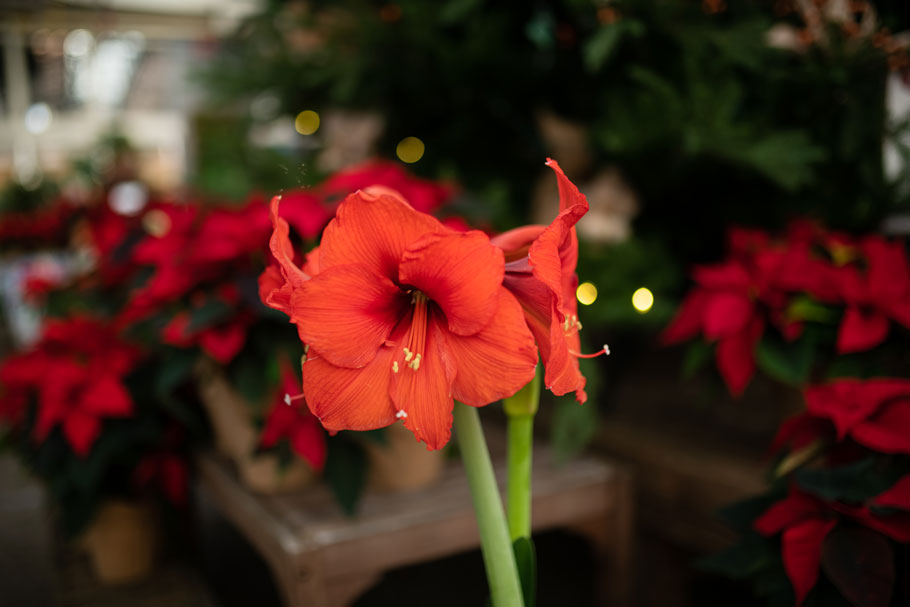
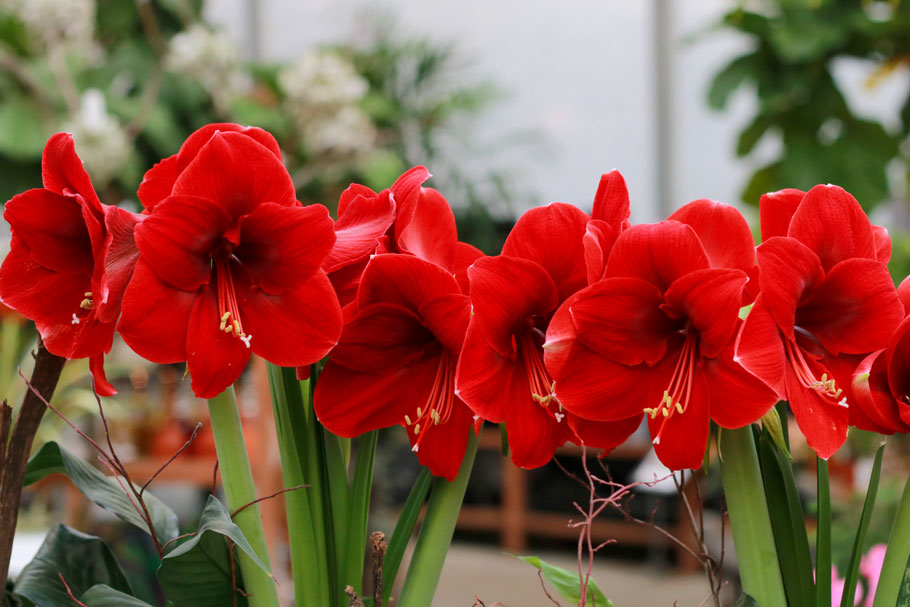
OVERVIEW Few plants deliver as dramatic a winter bloom as an Amaryllis. From a single dormant bulb, a tall, fleshy stem rises rapidly and opens into enormous trumpet-shaped flowers in red, white, salmon, pink, bicolour, and striped varieties. Amaryllis blooms from November through February, bringing spectacular colour indoors exactly when it is needed most. They are easier to grow than most people expect, they make extraordinary gifts, and with the right care they will rebloom year after year. |
TYPES OF AMARYLLIS
Choosing the right form for your needs
Amaryllis is available in several different forms, each suited to a different purpose or display style.
|
Standard Potted Bulb The classic Amaryllis experience • Single bulb planted in a pot with drainage: the most popular and reliable method • Larger bulbs produce more flower stems and more blooms per stem • Full control over timing: plant when you want to bloom • Bulbs can be saved and reflowered year after year with the right care • Available in a very wide range of colours and flower forms |
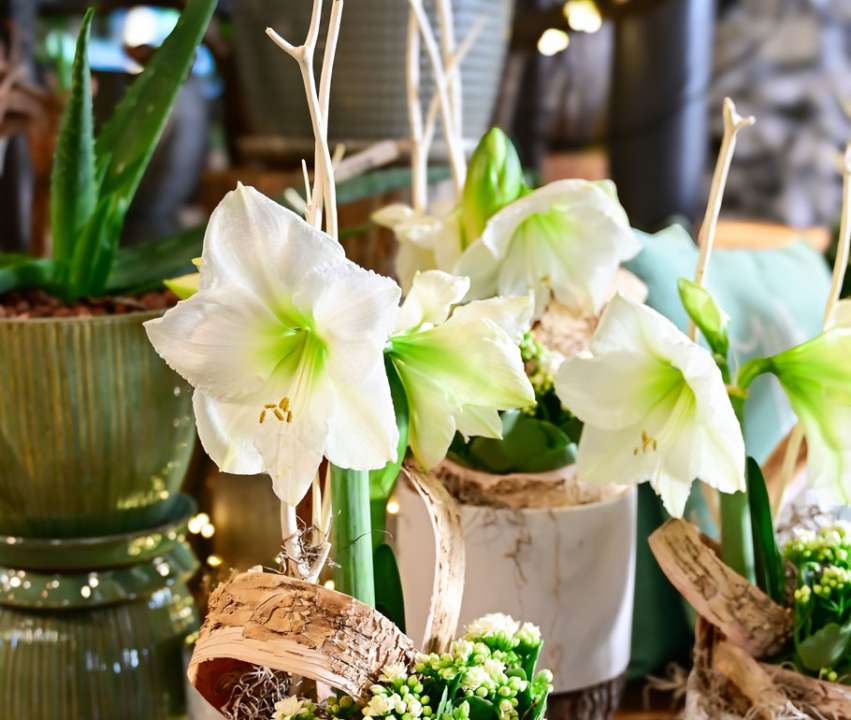
Amaryllis in Pebbles / Water Decorative and soil-free • Bulb sits on decorative gravel, glass beads, or pebbles in a watertight container • A small amount of water kept at the base encourages roots to reach down • New buds typically emerge within 1-2 weeks • Striking visual display: roots and bulb are part of the presentation • Treat as a one-season display; does not lend itself to reblooming |
|
Waxed Amaryllis No planting, no watering required • Roots are removed and the entire bulb is dipped and sealed in coloured wax • Completely self-contained: no pot, no soil, no watering needed at all • Simply place on a surface and watch it bloom over 4-6 weeks • Perfect for centrepieces, wreaths, gifts, and displays where watering is impractical • One-season use only: the root removal means the bulb cannot be reflowered |
Kit / Gift Sets Everything in one box • Includes bulb, pot, and growing medium in one ready-to-plant package • The ideal gift for gardeners and non-gardeners alike • Available in single or multi-bulb kits with a range of pot styles • Simply follow the enclosed instructions: results in 6-8 weeks • Ask Gardenworks staff for current season kit availability |
CHOOSING YOUR BULB
Bigger is better
• Choose the largest, firmest bulb you can find: bulb size directly determines flower quantity. A large bulb will produce multiple flower stems with 4-6 blooms each; a small bulb may produce only one stem
• The bulb should feel dense and heavy, not soft, spongy, or lightweight
• Avoid bulbs with soft spots, mould, or shrivelled necks
• Thick, white roots are a good sign; trim off any shrivelled or broken roots before planting
• Peel away any withered outer skin from the neck of the bulb before planting for a cleaner start
POTTING
Step-by-step planting guide
Planting an Amaryllis correctly is simple but specific. Follow these steps for the best results.
|
WHAT YOU WILL NEED • A pot approximately 5 cm (2 inches) wider in diameter than the bulb, with good drainage holes • A heavy pot is preferable: Amaryllis flowers are large and top-heavy, and a lightweight pot will tip • Gardenworks Premium Cactus and Succulent Mix, or any coarse, sandy potting mix with good drainage • Standard peat-heavy potting mixes retain too much moisture and can cause bulb rot; avoid them for Amaryllis • A cane or stake for support (optional but recommended for tall varieties) |
|
PLANTING STEPS 1. Add a small amount of potting mix to the bottom of the pot -- just enough so that when the bulb is placed on it, the top 2-3 cm (about 1 inch) of the bulb sits above the rim of the pot. 2. Place the bulb in the centre of the pot. 3. Fill soil in around the bulb, leaving the top third of the bulb -- from the neck upward -- exposed above the soil surface. Amaryllis dislike moisture around their necks; burying the neck causes rot. 4. If using a stake, insert it now between the pot wall and the bulb before watering, to avoid root damage later. 5. Water thoroughly and generously -- this first watering is important to activate the bulb after its dry dormancy period. 6. After the first watering, hold back and water sparingly until you see a flower bud or leaf tip beginning to emerge from the top of the bulb. Overwatering a recently planted Amaryllis before growth begins is the most common cause of rot. |
|
AMARYLLIS LOVES BEING POT-BOUND Amaryllis performs best with its roots slightly crowded. Do not be tempted to plant in a large container: a pot only 5 cm wider than the bulb is ideal. Repotting into a larger container is only needed every 3-4 years when the bulb has clearly outgrown its pot. |
GROWING CONDITIONS
Light, temperature and watering
• Light: place in a bright location -- a south or west-facing window is ideal. Good light keeps the flower stem compact and strong; insufficient light causes the stem to grow tall and floppy
• Temperature: Amaryllis prefers a warm room of around 21C. Cool nights help control bloom height and extend the flowering period; avoid placing near heating vents or radiators
• Watering before buds appear: water sparingly, only when the top 2-3 cm of soil is dry to the touch. The bulb contains all the moisture and energy it needs to push up its first stem; overwatering before growth begins is the primary cause of failure
• Watering once buds appear: increase watering to keep the soil evenly moist but never waterlogged. Check the pot daily once the flower bud is visible
• Rotate the pot a quarter turn every few days as growth begins: this encourages the stem to grow straight rather than leaning toward the light source
• Support the stem with a cane once it reaches 30 cm or more, particularly for varieties with multiple heavy flower heads
|
TIMING YOUR BLOOM Amaryllis flowers open 6-8 weeks after planting. To time a bloom for Christmas, plant in late October to early November. To enjoy the flowers in January -- perfect if you missed the holiday window -- plant in mid-November through early December. Once blooming, cooler temperatures (15-18C) extend the display significantly. |
AMARYLLIS IN PEBBLES OR WATER
The decorative soil-free method
• Choose a watertight vase or bowl at least as wide as the bulb
• Fill with a 5-8 cm layer of decorative gravel, glass pebbles, or washed river rock
• Nestle the bulb onto the surface of the pebbles so it sits firmly without tipping
• Add water until it just reaches the base of the bulb -- the roots should reach the water but the bulb base itself should not sit in water
• Place in a bright, warm location and check the water level every few days
• Roots should be visible within a week and buds emerge within 1-2 weeks
• This method works best as a one-season display; the bulb is not easily saved for reflowering this way
GETTING YOUR AMARYLLIS TO REBLOOM
The year-round rebloom cycle
Amaryllis is not just a one-season novelty. With a little effort through the year, the same bulb will grow larger, produce more offsets, and rebloom reliably each winter for many years. The key is treating the plant as an active, growing houseplant from the moment the flowers fade until late summer.
|
Stage |
What to Do |
|
Post-bloom (Jan-Mar) |
Treat as a houseplant. Water regularly, feed with a balanced liquid fertilizer every 2-3 weeks. Keep in a bright spot indoors. |
|
Spring (Apr-May) |
Move outdoors once night temperatures stay above 10C. Choose a bright, sheltered spot. Continue regular feeding and watering. |
|
Summer (Jun-Jul) |
Full outdoor growth phase. The more leaves, the bigger next year's bulb. Feed with a balanced fertilizer every 2 weeks. |
|
Late Summer (Aug) |
Begin reducing water in August. Stop fertilizing. Allow the foliage to yellow and die back naturally; do not cut it prematurely. |
|
Dormancy (Sep-Oct) |
Once all foliage has died, remove it cleanly. Move the pot to a cool (10-13C), dry, dark location: a garage, cool basement, or shed. |
|
Reawakening (Oct-Nov) |
After 8-10 weeks of dormancy, bring the pot back to warmth. Water once to trigger growth. Repot if the bulb has outgrown its container. |
|
New bloom (Dec-Jan) |
Keep at room temperature (around 21C) and water when the top 2-3 cm of soil is dry. A new flower stalk should emerge within 6-8 weeks. |
|
REBLOOMING TIP • The more leaves the plant produces through spring and summer, the more energy is stored in the bulb and the bigger and better next year's bloom will be • Do not cut leaves back prematurely -- even when they look untidy, they are feeding the bulb • Amaryllis bulbs produce offsets (small bulblets around the base) over time. These can be carefully removed and potted separately once they are about one-third the size of the parent bulb. They will take 2-3 years to reach blooming size |
COMMON ISSUES
Troubleshooting
|
STEM GROWING TALL AND FLOPPY Caused by insufficient light or too much warmth. Move the plant to a brighter location and away from heating vents. A cooler room (15-18C) during blooming keeps stems shorter and stronger. Stake the stem gently with a cane tied loosely. |
|
BULB OR STEM ROTTING AT THE BASE Caused by overwatering before growth begins, or by the bulb neck being buried in soil. Allow soil to dry between waterings before any growth appears. Ensure the top third of the bulb is always above the soil surface. |
|
NO GROWTH AFTER 8 WEEKS The bulb may need a short period of warmth to trigger growth. Place in a warm spot (21-24C) and water once if completely dry. If the bulb feels firm and shows no signs of rot, it will almost certainly emerge -- patience is the main requirement. |
|
LEAVES BUT NO FLOWER STEM Usually means the bulb did not receive a proper dormancy period before being restarted, or was not fed adequately through summer. Ensure the plant goes through a genuine 8-10 week cool, dry, dark dormancy period next cycle, and feed generously with a balanced fertilizer through spring and summer. |
FREQUENTLY ASKED QUESTIONS
FAQ
How long does an Amaryllis bloom last?
Each individual flower lasts approximately 7-10 days. A single stem typically carries 4-6 flowers that open in succession, and a large bulb will often produce 2-3 stems in sequence, extending the overall display to 4-6 weeks or more. Cooler temperatures (15-18C) significantly extend the life of individual flowers.
Can I grow Amaryllis outdoors in BC?
Amaryllis (Hippeastrum) is a tropical bulb and is not cold-hardy outdoors in BC. It will not survive winter outdoors anywhere in the province. It can be moved outside to a sheltered, bright spot during BC's warm summers (once night temperatures reliably exceed 10C) as part of the rebloom cycle, but must be brought back indoors before autumn temperatures drop.
Is Amaryllis toxic to pets?
Yes. All parts of the Amaryllis plant -- the bulb, stem, leaves, and flowers -- are toxic to cats and dogs if ingested. Symptoms include vomiting, diarrhea, lethargy, and tremors. Keep Amaryllis out of reach of pets, or choose a different plant if you have animals that chew on houseplants. Contact your veterinarian immediately if you suspect ingestion.
Why is my Amaryllis not reflowering?
The most common reason is insufficient light and feeding through the spring and summer growth period, which results in a bulb that has not stored enough energy for flowering. The second most common reason is skipping or shortening the autumn dormancy period: 8-10 weeks of cool, dry, dark conditions is essential to trigger the hormonal response that initiates a new flower stem. Follow the rebloom calendar in this guide closely.
Can I plant the small bulblets growing around the base of my Amaryllis?
Yes. Offsets (small bulblets that form around the parent bulb) can be carefully removed when repotting and potted separately in their own small containers. Treat them as young bulbs: they will not flower for 2-3 years while they grow to blooming size, but with feeding and a proper annual dormancy cycle they will eventually become full-flowering plants.
What is the difference between Amaryllis and Hippeastrum?
The plants sold commercially as 'Amaryllis' -- including all the large-flowered holiday bulbs at Gardenworks -- are botanically Hippeastrum, a South American genus. True Amaryllis is a separate, smaller-flowered South African genus. The name 'Amaryllis' has been used commercially for Hippeastrum for so long that it is now the standard common name, and the two are used interchangeably in garden retail. When in doubt, the large, dramatic holiday bulb is always a Hippeastrum.
Click here to download a printable PDF.
© 2026 Gardenworks | gardenworks.ca/care-tips | Growing Made Simple.