
 Proudly BC Owned & Operated for over 40 years.
Christmas Tree Care
Available at All Gardenworks Locations | Over 30 Years of Christmas Tree Excellence
|
ABOUT OUR TREES Gardenworks has been selling fresh cut Christmas trees for over 30 years. Each year we visit our growers to personally verify quality before the season begins. We offer a curated selection of the finest varieties available, chosen for their fragrance, needle retention, branch strength, and overall beauty. Every tree has its own character and this guide helps you find the one that is right for your home. |
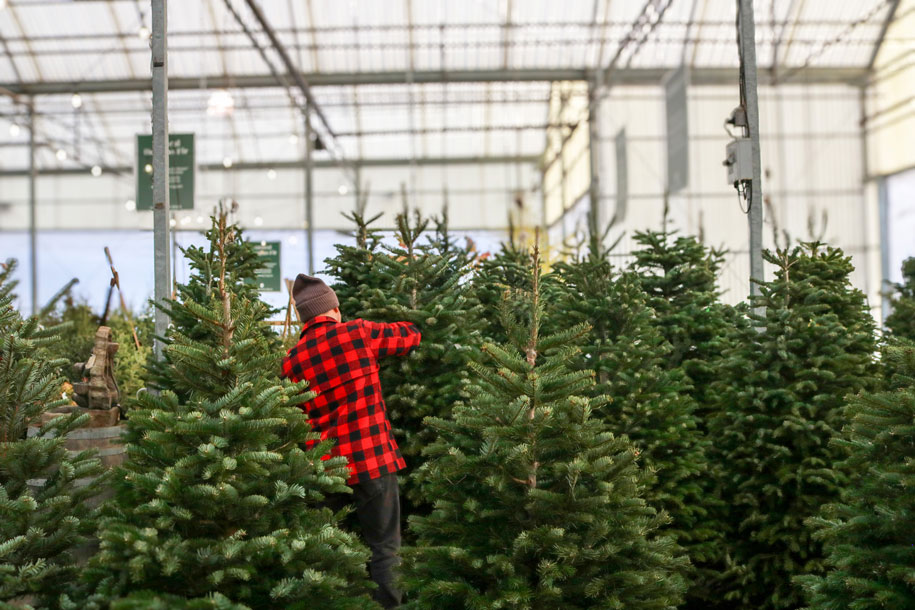
TREE VARIETIES
Our fresh cut Christmas tree selection
Each variety has its own personality, fragrance, and strengths. Selection and availability varies by location. Ask our team what is available when you visit.

Noble Fir
|
Noble Fir Top pick for heavy ornaments • Deep green to blue-green needles with a silvery underside • Strong, distinctly layered branches hold heavy ornaments exceptionally well • Pleasantly fragrant without being overpowering • Excellent needle retention: one of the longest-lasting trees available • Widely considered the premium choice for a long-lasting, beautifully decorated tree |
Natural Douglas Fir The classic 'Charlie Brown' tree • The iconic BC Christmas tree with distinctive open, informal branching • Broadly tapered branches with natural character and unique silhouette • Delightfully strong, classic evergreen fragrance • A beloved West Coast tradition; no two trees are exactly alike • Good needle retention with proper watering; very affordable |
|
Cultured Douglas Fir The West Coast classic, perfected • A Douglas Fir grown with careful shaping for a full, dense canopy • Deep green needles with that signature strong Douglas Fir fragrance • Perfectly shaped from base to tip: symmetrical and traditional • Great needle retention with regular watering • A Gardenworks favourite for over 30 years, the definitive West Coast Christmas tree |
Fraser Fir Best for small spaces and minimal mess • Medium green needles with a distinctive silvery-white underside • Strong branches with a naturally narrow, upright form • Excellent for smaller rooms or tight spaces between furniture • Lightly fragrant with a clean, fresh scent • Outstanding needle retention: one of the least messy options available |
|
Nordmann Fir Best for families with pets or young children • Soft, non-prickly deep green needles: gentle to touch • Evenly spaced, strong branches hold ornaments very well • Full, symmetrical shape with excellent density • Pleasantly fragrant without being overwhelming • Outstanding needle retention: the top choice for keeping the season mess-free |
|

Nordmann Fir
QUICK COMPARISON
Side-by-side variety guide
|
Variety |
Fragrance |
Needle Retention |
Branch Strength |
Form |
Best For |
|
Noble Fir |
Moderate |
Excellent |
Strong |
Full & layered |
Heavy ornaments, long season |
|
Natural Douglas Fir |
Strong |
Good |
Variable |
Open & informal |
Classic look, fragrance lovers |
|
Cultured Douglas Fir |
Strong |
Very good |
Good |
Full & dense |
Traditional West Coast feel |
|
Fraser Fir |
Light |
Excellent |
Strong |
Narrow & upright |
Small spaces, minimal mess |
|
Nordmann Fir |
Moderate |
Excellent |
Strong |
Full & symmetrical |
Families with pets or children |

Faser Fir
|
AVAILABILITY NOTE Tree selection and availability varies by Gardenworks location. Visit early in the season for the best selection, particularly for Noble Fir and Nordmann Fir, which tend to sell out first. Our team at each location can advise on what is currently in stock. |
CHOOSING YOUR TREE
How to pick a fresh, healthy tree
• The freshness test: run your fingers along a branch toward the tip -- needles should stay on the branch with only a few falling. Excessive needle drop indicates an older or poorly stored tree
• The bend test: a fresh needle should bend without snapping; a dry needle snaps immediately
• The colour test: look for deep, vibrant green colour throughout; yellowing at the tips indicates moisture stress
• Consider your space: measure ceiling height and leave at least 30 cm for the stand and your tree topper
• Consider the fragrance: Douglas Fir is the most strongly scented; Fraser and Nordmann Fir are lighter if you prefer a subtler scent
|
TRANSPORT TIP Once you have chosen your tree, our team can supply twine to make transport easier and to protect the branches but we recommend brining your own rope or bungie cords. If transporting on a roof rack, keep the butt end forward (facing into the wind) and cover the tree with a tarp if possible. Do not leave the tree in a hot vehicle as heat causes rapid moisture loss. |
FRESH CUT TREE CARE
Keeping your tree fresh and safe through the holidays
A well-cared-for fresh cut tree will stay green, fragrant, and beautiful through the entire holiday season. The single most important factor is water, a fresh tree is a thirsty tree.
|
STEP-BY-STEP SETUP
1. Make a fresh cut at the base of the trunk before placing in the stand. Cut at least 2.5 cm (1 inch) from the bottom, straight across. This removes the dried sap seal that has formed and opens the tree's water-absorbing pores. The fresh cut surface should be creamy white. Without this cut, the tree cannot absorb water. Our staff are happy to do this for you once you select your tree.
2. Get the tree into water as quickly as possible after the fresh cut. Ideally within an hour if you can. The longer the cut end is exposed to air, the more sap seals the pores again.
3. Fill the stand with warm water mixed with Keeps-It-Green (2 tablespoons per 4 litres of water). Keeps-It-Green helps the tree absorb water more efficiently and significantly extends freshness.
4. Check the water level in the stand daily. A new tree will drink the most water right after making the fresh cut, then slow down significantly after a few days, so it’s critical not to allow the water to get below the fresh cut. If the water level drops below the cut end of the trunk even once, a sap seal will reform and the tree will stop taking up water, at that point, a new cut is needed.
5. Allow up to 24 hours for branches to fully settle and drop into their natural position before decorating. |
|
ONGOING CARE • Check and top up the stand water every day. This is the single most important thing you can do. • Position the tree away from heating vents, radiators, fireplaces, and sunny windows: heat and direct sun cause rapid moisture loss and early needle drop • Use LED or miniature low-voltage lights: they generate far less heat than traditional incandescent lights and significantly reduce drying • Check all light strings for frayed or cracked wire insulation and broken sockets before placing them on the tree • Keep gifts and wrapping paper well away from the base of the tree |
|
FIRE SAFETY A well-watered fresh cut tree is not a significant fire hazard. A dry, neglected tree is extremely dangerous. Always keep the stand filled with water, use lights that are certified and in good repair, turn off all tree lights before leaving the home or going to sleep, and never place candles near the tree. If you notice the tree drying out significantly, needles becoming brittle, and lots of needle drop, it is time to take it down. |
LIVING TREES
Caring for a living Christmas tree
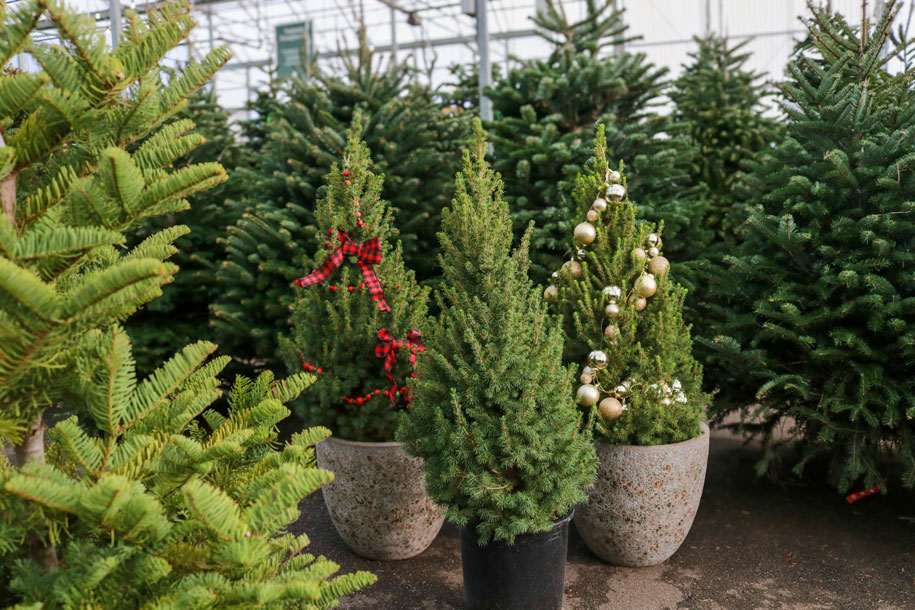
A living tree is a potted or balled and burlapped tree that can be planted outdoors after the holidays. It is a wonderful, sustainable alternative to a fresh cut tree. Living trees require more care indoors but reward you with a tree that continues to grow in your garden for years to come.
|
BEFORE BRINGING INDOORS • Acclimatize the tree gradually before bringing it inside: place it in a sheltered, unheated space such as a garage or carport for 2-3 days. Moving directly from cold outdoor temperatures to a warm home causes stress. • Soak the root ball thoroughly before acclimatization begins. |
|
WHILE INDOORS • Keep the tree indoors for no more than 10 days. The longer it stays inside, the more it acclimatizes to warmth and the harder the transition back outdoors will be. • Keep it away from all heat sources: heating vents, fireplaces, radiators, and sunny windows. • Water the root ball daily. • Use only small, low-voltage LED lights on living trees: heat from incandescent lights causes additional stress. • Check all light strings for frayed wire or damaged sockets before use. |
|
RETURNING OUTDOORS • Reverse the acclimatization process: move the tree to a sheltered, unheated space for at least one week before placing it in its final outdoor position. • Water the root ball well before moving outdoors. • If the ground is not frozen, the tree can be planted immediately. Choose the planting site before the holidays so it is ready when the tree comes out. • If the ground is frozen, keep the tree in a sheltered spot with the root ball protected from hard freezing until planting is possible in early spring. |
AFTER THE HOLIDAYS
What to do with your tree when the season is done
• Fresh cut trees: check with your municipality for curbside Christmas tree collection, most BC cities offer a designated pickup in early January.
• Trees can be chipped into mulch at municipal composting facilities -- call ahead to confirm drop-off locations and dates
• In the garden: a fresh cut tree laid on its side provides excellent temporary wildlife shelter and windbreak through winter.
• Branches can be cut and used as protective mulch over tender perennials and bulb plantings through winter.
• Living trees: plant outdoors after proper re-acclimatization, or donate to a community garden or green space if you do not have room.
FREQUENTLY ASKED QUESTIONS
FAQ
My tree stopped drinking water. What happened?
A sap seal has most likely formed over the cut end of the trunk, blocking water absorption. This happens when the water level drops below the cut end even briefly. The only solution is to remove the tree from the stand, make a fresh cut at least 2.5 cm from the bottom, and return it to fresh water with Keeps-It-Green immediately. This should restore water uptake within a few hours.
Which variety stays freshest the longest?
Nordmann Fir and Fraser Fir consistently offer the best needle retention and are the top choices if you want to put your tree up early or keep it through to early January. Noble Fir is also excellent. Natural and Cultured Douglas Fir have good retention with consistent watering but will drop more needles if allowed to dry out.
How much water does a Christmas tree need?
A fresh, actively drinking Christmas tree can consume between 1 and 4 litres of water per day, particularly in the first week after a fresh cut. Check the stand daily and keep the water level above the cut end of the trunk at all times. Use warm water mixed with Keeps-It-Green for best results.
Are LED lights better for keeping my tree fresh?
Yes. LED lights produce significantly less heat than traditional incandescent lights and reduce the drying effect on needles. They also use far less electricity and last much longer. LED lights are now the recommended choice for all Christmas trees, and are essential for living trees where heat stress is a real concern.
When is the best time to buy a Christmas tree?
Gardenworks typically receives its fresh cut tree shipments from mid-November onward. Shopping early in the season gives you the widest selection of varieties and sizes. Noble Fir and Nordmann Fir, especially the large sizes, tend to sell out earliest. All trees are kept well-maintained until purchase, so freshness is not a concern when buying from Gardenworks.
Can I plant my living Christmas tree permanently in my garden?
Yes! that is the whole point of a living tree. Most Christmas tree varieties are well-suited to BC's South Coast climate. Choose a site with adequate space for the tree's mature size, as Christmas tree species can grow to considerable heights when planted permanently. Avoid planting under overhead power lines or close to the house. Spring is the best time to plant once the tree has been re-acclimatized properly after the holidays.
Click here to download a printable PDF.
© 2026 Gardenworks | gardenworks.ca | Proudly BC Owned & Operated for over 40 years.